
Birding & Wildlife at Harman’s Log Cabin Resort
Bald eagles along the North Fork. Forest songbirds in Hopeville Canyon. Fall migration at Dolly Sods.
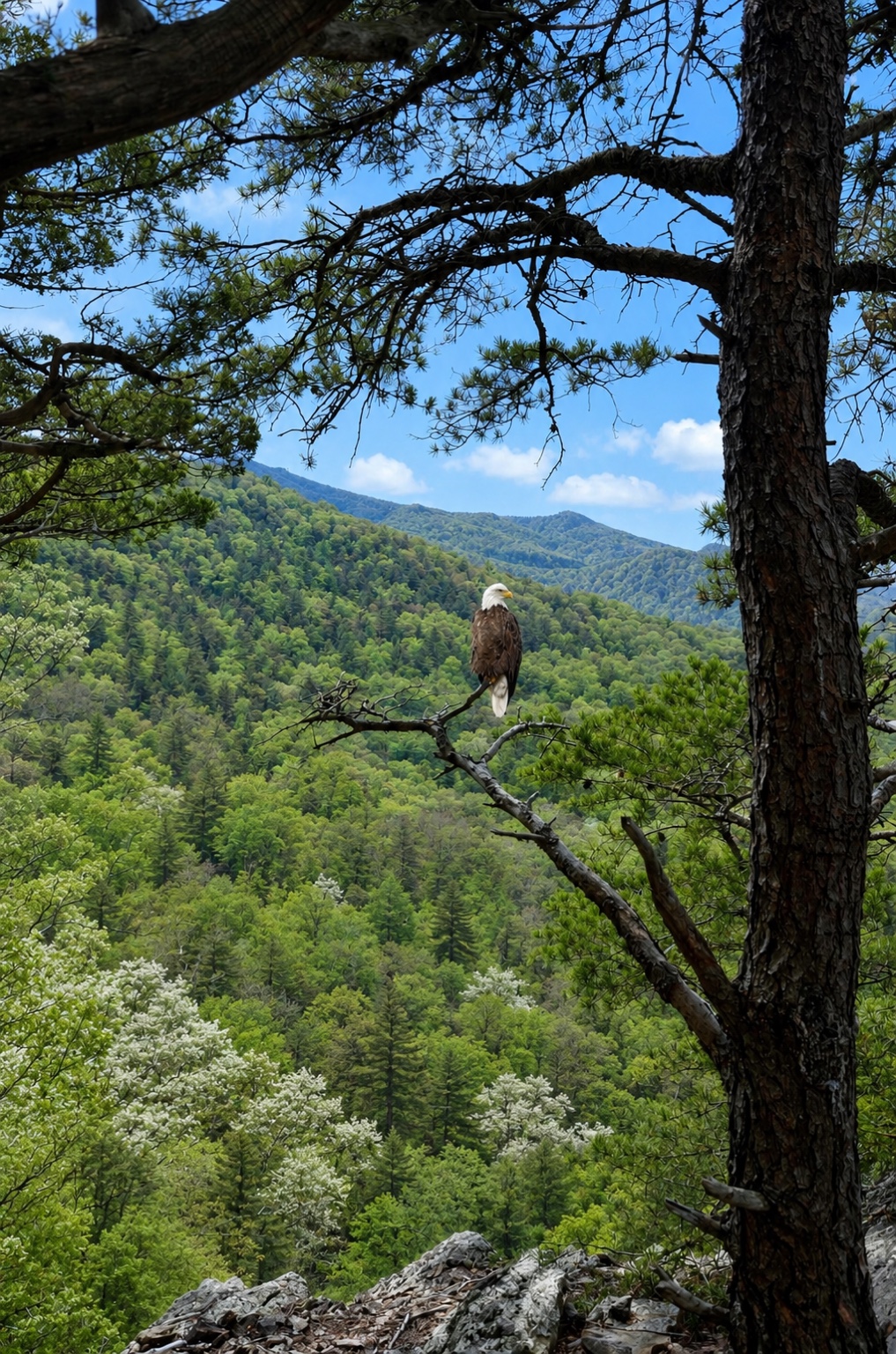
Watch for bald eagles along the North Fork River, where our family sees them almost daily. At Harman’s Log Cabin Resort in Cabins, West Virginia, a quiet morning on the porch or a walk beside our 1.5 miles of private trophy trout water can become a memorable birdwatching experience.
Start with the river and wooded trails at Harman’s, then explore the surrounding Potomac Highlands. The region’s forests, mountain ridges, and changing elevations give you several habitats to explore during one cabin getaway.
Ten birds to watch for · Canaan Valley Wildlife Refuge · Dolly Sods & AFMO · When to visit · Plan your birding stay
Birding With Rick Szabo at Harman’s
Rick Szabo, the birding guide and creator behind Birding With Rick, has spent time birding on Harman’s property. His approachable style connects people with the birds they see and hear, making him a natural part of our growing birding story in Hopeville Canyon.
Rick is also the winner of Season 1 of NBC’s Destination X. Explore his work at Birding With Rick and follow @birding_with_rick.
Coming in May 2027: A Four-Day Birding Class
Rick is planning to return to Harman’s for a four-day birding class around Mother’s Day weekend in May 2027. Dates, the daily program, pricing, and registration details will be announced once finalized.
Proposed dates: May 6–9, 2027 (Thursday–Sunday). Dates remain tentative.
View the class on Specials & Events · Ask Harman’s about the class
Ten Birds to Watch For
Begin with eagles at Harman’s, then broaden your search to the forests and waterways of the surrounding region. The birds below are a mix of familiar sights and seasonal species worth learning to recognize. Sightings vary with habitat, season, and weather.
1. Bald Eagle
Our signature birding experience. Watch for a broad-winged bird soaring through Hopeville Canyon or perched above the river. Adults have a white head and tail; younger birds are mostly brown.
Where to begin: The North Fork River, riverside walks, and cabin outdoor seating. Our family sees bald eagles almost daily, though a sighting on any particular visit cannot be guaranteed.
2. Pileated Woodpecker


Listen for strong drumming and look for a large woodpecker with a bright red crest. A woodland walk gives you a chance to enjoy the sounds of the forest as well as the birds you can see.
Where to look: Wooded trails and mature forests at and around the resort.
3. Scarlet Tanager


The male’s brilliant red body and black wings make this a memorable spring and summer bird. Females are olive-yellow, as shown in the photograph. Look into the leafy canopy and take time to listen before moving on.
Where to look: Deciduous forests in the surrounding mountains during the breeding season.
4. Osprey


These fish-eating birds of prey are worth watching for around rivers and lakes during seasonal travel. Look for long wings, a pale underside, and a dark stripe through the eye.
Where to look: Regional waterways with open water and fish. Treat osprey as a seasonal possibility, rather than a regular or guaranteed resort sighting.
5. Cerulean Warbler


This small, sky-blue songbird adds a special reason to explore Appalachian forests. It spends much of its time high in the canopy, so learning its song can be as useful as bringing binoculars.
Where to look: Suitable mature deciduous forest in the surrounding Appalachian region during spring and summer. This is a regional birding highlight; nesting at Harman’s has not been confirmed.
6. Barred Owl


Listen for the owl’s “Who cooks for you?” hoots. Its rounded head, dark eyes, and brown-and-white bars help distinguish it from other owls.
Where to look: Mature woods, especially near water, in the surrounding region. Listen quietly from established paths around dusk; give roosting birds plenty of space.
When to watch: Year-round; often easier to hear than see.
7. Baltimore Oriole


The male’s orange body and black head bring a flash of color to spring treetops. Listen for clear whistles and look for birds moving through the outer branches.
Where to look: Leafy trees along river corridors, woodland edges, and open groves in the North Fork Valley and surrounding region.
When to watch: Spring migration and summer.
8. Eastern Whip-poor-will


This beautifully camouflaged nightjar is best known by its repeated namesake call. Our family remembers whip-poor-wills in the region; listening for one adds a special evening possibility to a spring visit.
Where to look: Suitable open woodland and forest edges in the surrounding region after sunset. Current presence at Harman’s has not been confirmed. Listen without playing recorded calls.
When to watch: Late spring and summer evenings.
9. Belted Kingfisher


Listen for a sharp rattling call along the water. This blue-gray bird has a shaggy crest, a stout bill, and a habit of watching the river from an exposed perch before diving for fish.
Where to look: Riverside branches and open stretches of the North Fork and other regional waterways. Watch from established river viewing areas.
When to watch: Look wherever suitable water remains open; sightings vary.
10. Wood Thrush


Pause for its rich, flute-like song on a quiet woodland morning. Look for a warm brown back and bold dark spots on a white breast as it searches through leaf litter.
Where to look: Shady deciduous and mixed forests with mature trees and an understory in the surrounding Appalachian region.
When to watch: Spring and summer; listen early in the morning.
External bird photographs are identification references taken outside Harman’s.
Why Our Appalachian Forests Matter
Birding here connects a relaxing mountain stay with a much larger conservation story. The U.S. Fish and Wildlife Service identifies the Appalachian region as a stronghold for the Cerulean Warbler. This declining species depends on mature, structurally diverse deciduous forests, and habitat loss affects it across its breeding, migration, and wintering range.
For birders, that makes the forests around a Potomac Highlands getaway worth exploring thoughtfully. Enjoy the birds from trails and established viewing areas, give wildlife space, and leave nesting birds undisturbed.
Learn about Cerulean Warbler conservation
Peregrine Falcon Nesting Areas in West Virginia
West Virginia’s cliffs are part of the peregrine falcon’s nesting and recovery story. North Fork Mountain, just east of Harman’s, has documented historic peregrine nesting sites. West Virginia Division of Natural Resources reports recorded successful nesting on the mountain in earlier years. Those cliff habitats add another layer to the birding interest of the North Fork Valley and the surrounding Potomac Highlands.
Farther south, New River Gorge has been a focus of peregrine restoration, with nesting documented at the New River Gorge Bridge. It is much farther from Harman’s and is a separate West Virginia birding destination, rather than a nearby resort outing.
Historic nesting records help explain the importance of these landscapes; they do not establish an active nest today. Enjoy watching the region’s cliffs and skies from established trails and overlooks, and follow any seasonal wildlife closures.
Read WVDNR’s historic North Fork Mountain nesting record · Explore the New River Gorge peregrine story
Canaan Valley National Wildlife Refuge
Include Canaan Valley National Wildlife Refuge in your regional birding plans. Explore our refuge guide to help plan your outing and find official visitor information.
Explore Canaan Valley National Wildlife Refuge
Experience Fall Migration at Dolly Sods
The Allegheny Front Migration Observatory
Near Red Creek Campground at Dolly Sods, the Allegheny Front Migration Observatory (AFMO) has studied migrating birds since 1958. This volunteer banding station, supported by Brooks Bird Club, connects a visit to the mountains with the science of migration.
Terrain and favorable west winds can concentrate southbound birds at the station. Its long record helps researchers understand the songbirds traveling through this mountain landscape.
AFMO generally operates from late August into early October. Visitors can learn about banding when the station is operating and conditions permit. Check current information before traveling.
Birdwatching Through the Seasons
- Spring · Migration and returning songbirds
- April and May are rewarding months to listen for warblers and watch for returning tanagers in the region’s forests.
- Summer · Forest birds and quiet mornings
- Start early, before the day warms up. Enjoy woodland birdsong, riverside walks, and opportunities to watch eagles along the North Fork.
- Fall · The Allegheny Front and AFMO
- Late August through early October is the usual AFMO banding season. September combines migration interest with a mountain cabin getaway.
- Winter · Open views through the trees
- Leafless trees can make birds easier to spot. Watch for eagles, woodpeckers, cardinals, chickadees, and nuthatches, then warm up back at your cabin.
Plan Your Birding Stay
Start at Harman’s
Bring binoculars outside with your morning coffee. Follow the riverside walk, listen along wooded trails, and pause to watch the treetops and river. Explore our walks and nearby hikes for ideas that suit your group.
Explore the Surrounding Region
Explore North Fork Mountain’s cliff country east of Harman’s, build an outing around the Dolly Sods area and its seasonal AFMO station, or visit the forest habitats around Seneca Rocks, Smoke Hole, and Spruce Knob. Choose your destination for the habitat and season, and check current access before setting out.
Bring Merlin Bird ID
The Cornell Lab of Ornithology’s free Merlin Bird ID app can help you identify birds you see and hear. Sound ID offers suggestions from birdsong and works offline. Download the app and set it up before your outing, especially because cell service around Harman’s is limited. Listen and observe to help confirm each suggestion.
Keep a Simple Sightings List
Use a notebook or your phone to record the bird, date, location, and whether you saw or heard it. Start with our ten featured birds, add the other species you discover, and share your sightings with our staff. Keep your Harman’s observations separate from birds seen on regional outings.
Birdwatching FAQs
Can I see bald eagles at Harman’s?
Our family sees bald eagles almost daily along the North Fork River. Watch from your cabin’s outdoor seating, riverside walks, and other established viewing areas. Wildlife sightings vary, so keep looking throughout your stay.
When should I plan a birding getaway?
Choose April or May for spring songbirds, or consider a fall stay during AFMO’s usual late-August-to-early-October season. Eagles and resident woodland birds give you reasons to look and listen throughout the year.
Can I visit the AFMO banding station?
Visitors can learn about the work during the operating season when conditions permit. Use the Brooks Bird Club link above for current information before planning the trip. Follow the banders’ directions and give their research space.
Do I need birdwatching experience?
No. Start with a quiet walk, binoculars if you have them, and a few minutes listening. Merlin can help with identification. Families can make a game of recording the birds they notice before breakfast.
Are the ten featured birds all regular sightings at the resort?
No. Bald eagles are our signature frequent sighting. The list also includes seasonal and regional birds to seek in suitable habitat, rather than ten confirmed regular resort sightings. Osprey sightings are seasonal possibilities, and Cerulean Warbler nesting at Harman’s has not been confirmed.
Your Cabin in West Virginia’s Birding Country
Spend the morning listening to the woods, explore the Potomac Highlands, and return to a private outdoor hot tub and a comfortable cabin. Whether you are keeping a life list or simply watching your first eagle, leave a little time to look up.